

Salt air, blazing sun, sandy parking lots, and being tossed around in the back of a truck bed — a surfboard bag has one of the toughest jobs in any surfer's gear closet. Yet most riders only think about their surfboard bag the day it fails: a zipper jams at the airport, a seam splits on a road trip, or the padding goes flat right before a big swell. If you've ever asked yourself why some bags survive years of saltwater abuse while others fall apart in a single season, the answer usually comes down to a handful of design and material choices that most surfers never think to check.
This guide breaks down the seven things that actually determine how long a surfboard bag holds up in real ocean conditions, not just in a store display. Whether you're storing your board in a garage, strapping it to a roof rack, or checking it as luggage on a surf trip, understanding these factors will help you choose gear that protects your investment for years, not months. It's easy to assume that all board bags are basically the same and that price is the only real difference, but the truth is that construction quality, fabric choice, and small design details are what separate a bag that survives years of coastal abuse from one that needs replacing after a single summer. For a closer look at boards, bags, and everything else surfers need to keep their gear in top shape, FARO Board Bags is worth bookmarking as a resource for surfers who take their gear seriously.
1. High-Denier, UV-Resistant Outer Fabric
The single biggest factor in how long a surfboard bag lasts is the fabric it's made from. Cheap bags often use thin, low-denier nylon or polyester that looks fine on day one but breaks down fast under constant UV exposure. Denier measures the thickness and durability of the fabric fibers — the higher the number, generally the tougher the material.
Durable board bags typically use 600D to 1200D fabric with a UV-stabilized coating. This matters because ocean environments hit gear with a double dose of punishment: intense sun that degrades synthetic fibers over time, and salt crystals that work their way into weak stitching and worn fabric. A bag built with UV-resistant, high-denier material resists fading, cracking, and thinning far longer than a budget option, even when it's left on a roof rack or in direct sun between sessions.
It's also worth noting that fabric weight isn't the only variable — weave tightness and the type of coating applied matter just as much. A tightly woven fabric resists abrasion from sand and rough handling far better than a loosely woven one, even at a similar denier rating. Surfers who regularly load and unload boards from a truck bed or drag a bag across a parking lot will notice the difference in how well the outer shell resists scuffing and pilling over time.
2. Reinforced Stitching at Stress Points
Fabric quality only matters if the seams holding it together can keep up. Most surfboard bag failures don't happen in the middle of a panel — they happen at the seams, especially around the nose, tail, handles, and zipper junctions. These are the points that absorb the most stress every time you carry, load, or drag the bag.
Look for double or triple stitching, bar-tacked reinforcement at handle attachment points, and heavy-duty thread rated for outdoor use. A well-reinforced bag distributes pressure across the seam instead of concentrating it on a single stitch line, which is exactly what prevents rips when you're wrestling a heavy board bag through a doorway or into a car trunk with wet hands.
Thread material matters here too. Standard polyester thread holds up reasonably well, but bonded nylon thread offers better resistance to UV degradation and abrasion, which means seams stay tight even after months of exposure. If you've ever noticed a seam slowly unraveling along the rail of a bag, it's usually a sign that lower-grade thread was used in a spot that takes constant friction.
3. Quality Zippers and Hardware
Zippers are usually the first thing to fail on a poorly made surfboard bag, and it's almost always due to salt and sand exposure. Standard zippers corrode quickly in coastal air, and once sand gets into the teeth, they jam or tear away from the fabric entirely.
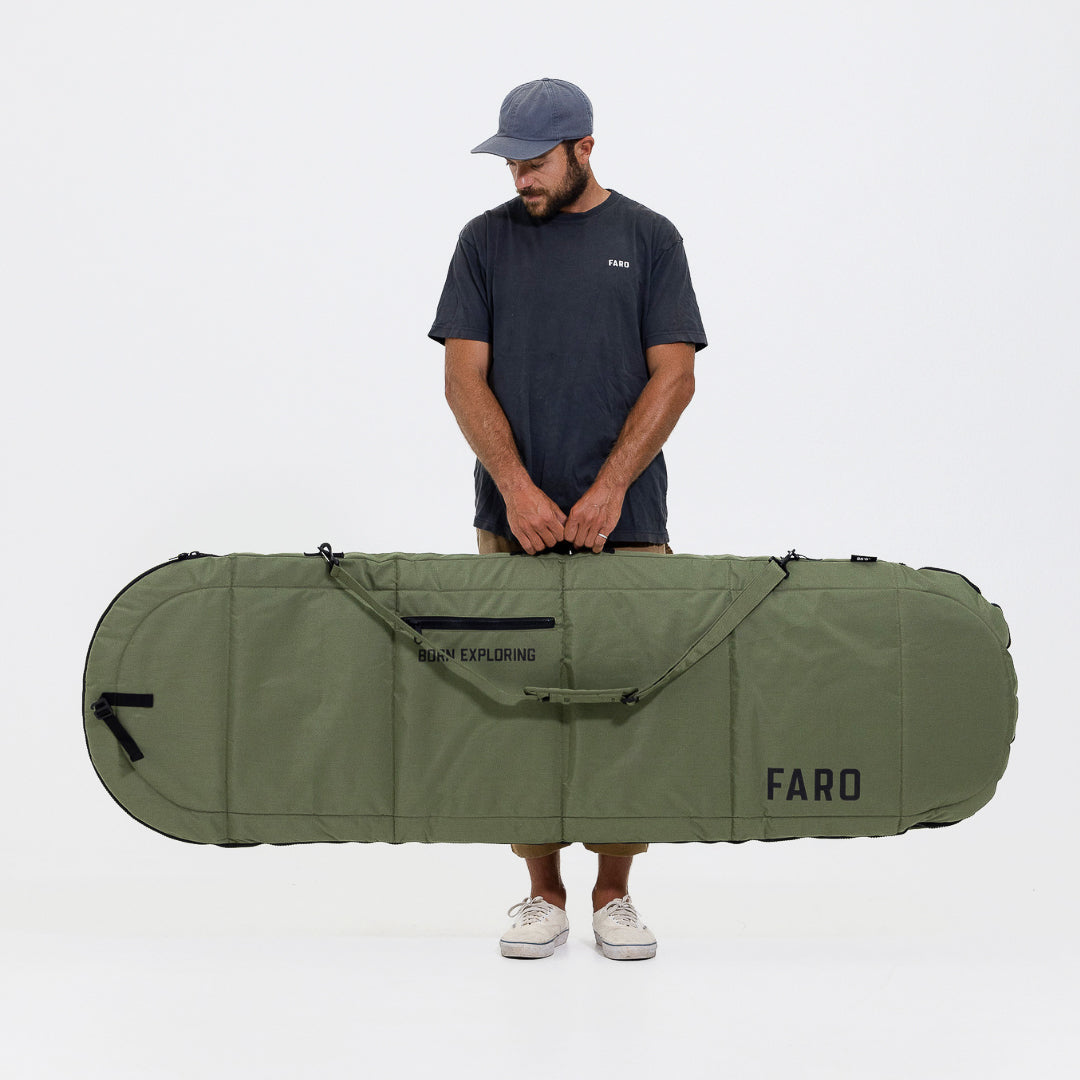
Better surfboard covers use corrosion-resistant zippers — often coated or made from marine-grade materials — paired with wide zipper pulls that are easy to grip with sandy or wet hands. Reinforced zipper garages (the fabric flap that covers the zipper track) also help keep grit and moisture out of the mechanism. If you've ever had a zipper fail mid-trip, you already know how much this single component affects the overall lifespan of the bag.
4. Adequate Padding and Impact Protection
A surfboard bag isn't just a cover — it's your board's only line of defense against dings, pressure dents, and heat damage. Thin, single-layer padding might look sleek, but it compresses quickly and stops protecting the board long before the bag itself wears out.
Bags with multi-layer padding, especially in the nose and rail areas, absorb impact more effectively and hold their shape over repeated use. This is particularly important for surfers who travel, check boards as luggage, or store multiple boards stacked together, where pressure and impact are a daily reality. Over time, low-density foam flattens and loses its cushioning ability, which means even a bag that looks intact can quietly stop protecting the board the way it used to. Higher-density foam or layered padding systems resist this compression much longer, keeping impact protection consistent trip after trip.
If you're comparing options, it's worth browsing FARO's dedicated surfboard bags collection to see how padding thickness and construction vary between models built for casual use versus real travel and storage demands.
5. Ventilation to Prevent Heat and Moisture Damage
One of the most overlooked causes of premature surfboard bag failure isn't physical wear — it's heat and trapped moisture. A board bag left in direct sun without airflow can turn into a small oven, and that heat doesn't just affect the surfboard, it also degrades foam padding, weakens adhesive seams, and causes fabric coatings to break down faster than normal.
Bags with mesh vents or breathable panels reduce this risk significantly. Proper ventilation lets heat escape and prevents condensation from building up inside the bag after a session, which is a common cause of mildew, fabric staining, and long-term material breakdown. This feature matters even more for surfers in hot climates or anyone who stores their board bag in a garage or shed with limited airflow.
6. Water-Resistant (Not Just Water-Repellent) Coating
There's a real difference between a bag that's water-repellent and one that's genuinely water-resistant, and it affects how the bag performs over time. Water-repellent coatings wear off relatively quickly, especially with regular saltwater exposure, leaving the underlying fabric to absorb moisture directly.
A true water-resistant coating, often a polyurethane or wax-based treatment bonded into the fabric, holds up much longer under repeated wet-dry cycles. This is essential surf gear care knowledge for anyone who regularly packs a wet board straight after a session, since trapped moisture against untreated fabric is one of the fastest ways to accelerate mold, odor, and material breakdown.
7. Thoughtful Design for Real-World Handling
The last factor is one that's easy to overlook: how the bag is actually designed to be carried, loaded, and stored. Padded shoulder straps, sturdy top and side handles, and a shape that matches your board type all reduce the everyday wear and tear that adds up over a season. A bag that's awkward to carry gets dragged, dropped, and mishandled more often, and that physical abuse shortens its lifespan just as much as sun or salt exposure does.
Surfers who travel frequently should also look for features like wheels on longer bags, external pockets for wax and fins, and compression straps that keep the board secure and prevent unnecessary shifting during transport. These details don't just make the bag more convenient, they directly reduce the stress placed on seams, zippers, and padding over time.
Even something as simple as handle placement can affect longevity. Handles positioned too close to the zipper track put extra strain on that seam every time the bag is lifted, while handles reinforced separately from the zipper area distribute weight more evenly. Over dozens or hundreds of loading cycles, that small design choice adds up to a noticeably longer lifespan for the bag as a whole.
Why Durability Should Drive Your Buying Decision
It's tempting to choose a surfboard bag based on price or looks alone, but the surfers who get the most value out of their gear are the ones who prioritize durable board bags built with the materials and construction covered above. A well-made bag isn't just about protecting your board from a single ding — it's about consistent, reliable protection trip after trip, season after season, in conditions that punish anything less than well-built gear.
FARO designs surfboard covers with these exact factors in mind: high-denier UV-resistant fabric, reinforced stitching, quality hardware, and padding built for real ocean conditions rather than showroom appeal. If you want to learn more about the philosophy behind that approach, the team's story is outlined on the FARO About page.

Protect Your Board With Gear Built for the Ocean
A surfboard bag is only as good as the materials and construction behind it, and in harsh ocean conditions, those details make all the difference between gear that lasts and gear that lets you down. Fabric weight, seam reinforcement, hardware quality, padding, ventilation, water resistance, and thoughtful design all work together, and skipping on any one of them shortens the life of the whole bag. If you're ready to invest in a surfboard bag designed for real durability, explore FARO's lineup and find the right fit for how and where you surf.
Ready to protect your board with gear built for the long haul?
Have questions about sizing, materials, or which bag suits your board best? Get in touch with the FARO team and they'll help you choose gear built to last.
Frequently Asked Questions (FAQ)