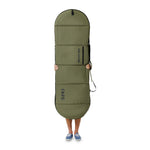


Buying the right surfboard bag sounds simple until you actually start comparing sizes, shapes, padding levels, and travel options. Many surfers assume that if their board is 5 feet long, they only need a basic 5’ bag. In reality, choosing the wrong bag size can lead to unnecessary board movement, zipper pressure, rail damage, crushed tails, or poor travel protection. This becomes even more important when riding fish boards and grovelers because these boards are typically wider, thicker, and shaped differently from traditional shortboards.
For beginner surfers and shortboard riders, one of the most common questions is what size surfboard bag for 5 foot board actually provides the best fit and protection. The answer depends on multiple factors including board width, thickness, tail shape, fin setup, travel needs, and how often the board is transported.
A properly fitted surfboard bag does far more than simply cover the board. It protects performance, extends board lifespan, prevents pressure dings, reduces UV exposure, and makes transportation easier whether you are driving to your local break or preparing for surf travel.
At FARO Board Bags, surfboard protection is designed around real surfing conditions, modern board shapes, and practical travel needs rather than generic sizing alone. This approach becomes especially valuable for surfers riding fish boards, grovelers, and hybrid shortboards that require more precise bag dimensions.
Why Surfboard Bag Sizing Matters More Than Most Surfers Realize
One of the biggest mistakes surfers make is assuming every 5’ surfboard bag fits every 5’ board equally well. Surfboard dimensions vary significantly even when the board length appears identical.
For example, a traditional performance shortboard may have:
-
Narrow rails
-
A pulled-in tail
-
Lower overall volume
-
Thinner width dimensions
Meanwhile, a fish board or groveler often includes:
-
Wider outlines
-
Fuller noses
-
Increased thickness
-
Swallow tails
-
Higher volume designs
Because of this, fish board bag size requirements are usually different from standard shortboard sizing.
A bag that fits too tightly can place pressure on rails, nose contours, tail sections, fin boxes, and zippers. Over time, this pressure may contribute to compression damage, stress points, and material wear.
On the other hand, a bag that is too large allows the board to shift excessively during transportation. Movement inside the bag can increase the risk of rail dings, nose impact, tail damage, internal abrasion, and fin pressure. Proper sizing helps create a balance between protection, stability, and ease of use.
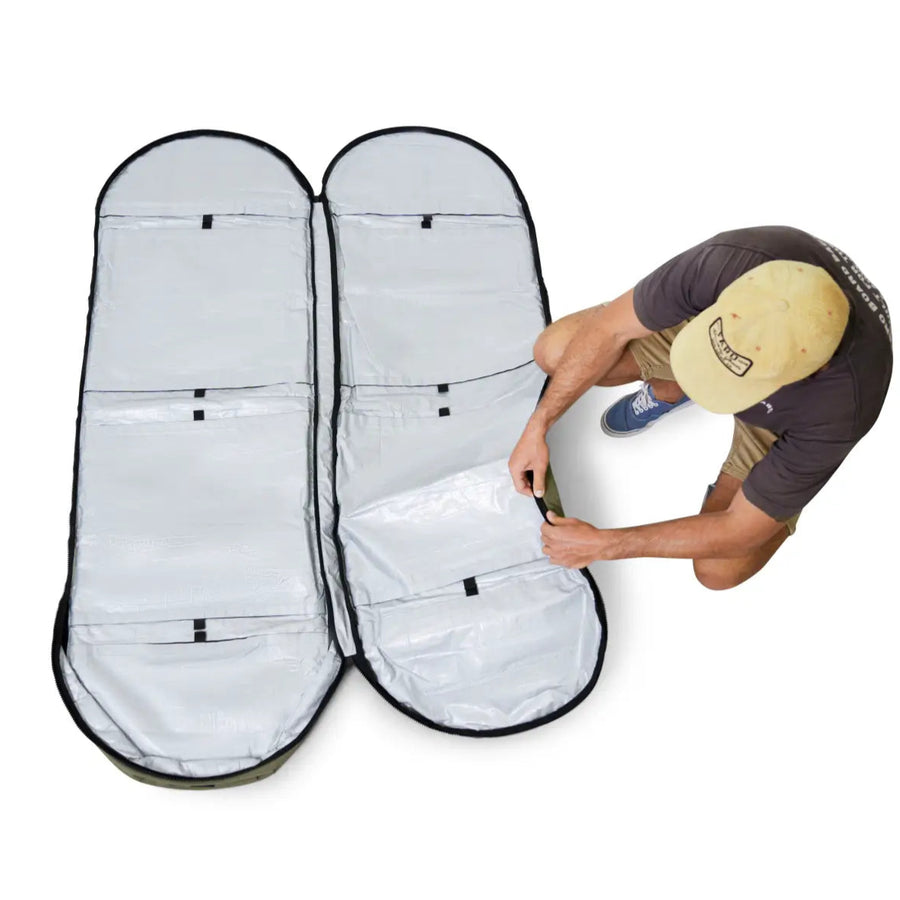
What Size Surfboard Bag for 5 Foot Board Works Best?
In most situations, surfers should choose a bag slightly larger than the actual board length, particularly when riding wider fish boards or grovelers. But FARO bags are built for these unique shapes.
For example:
-
With a FARO BOARD BAG A 5’0 fish board often fits comfortably in a 5’0" bag
-
Wider grovelers may require extra internal width with other bags but FARO Board Bags fit those boards conformably
-
Heavily padded travel bags sometimes need additional clearance, not FARO bags.
The ideal fit depends on:
-
Board width
-
Thickness
-
Tail shape
-
Intended use
-
Internal padding
-
Fin configuration
Understanding Fish Board Bag Size Requirements
Fish boards are designed differently from traditional shortboards because they prioritize speed, paddle power, and small-wave performance. Their wider templates create unique storage and transportation challenges that many beginner surfers overlook.
Proper fish board bag size selection should account for wide-point dimensions, tail width, rail thickness, nose fullness, and overall board volume. Many generic shortboard bags technically match the board length while still fitting poorly around the wider profile.
This can create unnecessary strain on bag seams, zippers, rails, and tail corners. At FARO surfboard travel systems, bag designs are created with modern surfboard outlines in mind, helping surfers find more functional fits for fish boards, grovelers, and hybrid shortboards without excessive compression or wasted internal space.
Why Shortboard Protection Is Important Beyond Surf Travel
Many surfers only think about surfboard protection when preparing for airline travel. However, most surfboard damage actually happens during everyday transportation and storage.
Common daily risks include:
-
Heat exposure inside vehicles
-
Boards falling during loading
-
Rail impacts
-
Wax transfer
-
UV exposure
-
Fin pressure
-
Pressure dents from stacking
Consistent shortboard protection helps reduce these problems while preserving the board’s performance characteristics over time.
Modern surfboards are often built lighter to improve responsiveness and maneuverability. Unfortunately, lighter constructions can also become more vulnerable to compression damage, surface dents, rail cracking, and structural wear.
A quality padded surf bag helps reduce these risks while improving convenience and long-term board durability.
Board Sock vs Bag: Which One Should You Choose?
One of the most common questions beginners ask is whether they need a full surfboard bag or if a board sock provides enough protection.
Understanding the difference between board sock vs bag protection is important because both serve completely different purposes.
A board sock mainly protects against:
-
Wax transfer
-
Dust
-
Minor scratches
-
Light UV exposure
Board socks are lightweight, flexible, and convenient for quick storage or short-distance transportation. However, they provide very limited impact protection.
A padded surf bag is designed for rail protection, nose and tail impact reduction, heat resistance, travel safety, compression protection, and long-distance transportation.
For surfers regularly driving with boards, storing boards in vehicles, or traveling frequently, a properly padded surf bag provides significantly better protection. Many experienced surfers use board socks for indoor storage and padded bags for transportation and travel.
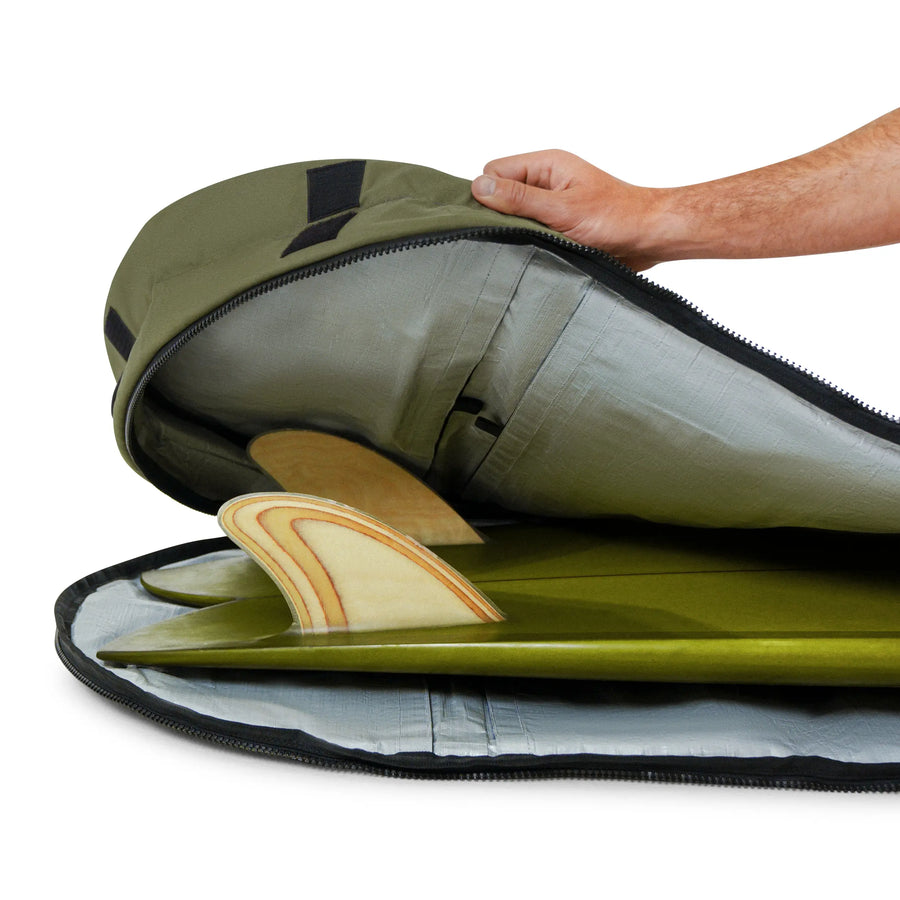
Choosing the Right Padded Surf Bag for Everyday Use
Not every surfer needs a heavy airline coffin bag. However, nearly every surfer benefits from some level of padded protection.
When selecting a padded surf bag, surfers should consider:
-
Padding thickness
-
Internal width
-
Zipper durability
-
Heat-reflective materials
-
Carrying comfort
-
Tail reinforcement
-
Rail protection
Day-use bags typically focus on lightweight construction, easy transport, moderate padding, and daily convenience. Travel-focused bags prioritize heavy-duty padding, impact absorption, reinforced stitching, and long-term durability.
Surfers searching for dedicated 5ft surfboard bag collections should evaluate how the bag will actually be used rather than choosing solely based on appearance or price.

Why Travel Surf Gear Quality Makes a Long-Term Difference
Cheap surfboard bags often seem acceptable initially, but problems usually appear after repeated exposure to real surf conditions.
Low-quality travel surf gear commonly develops:
-
Broken zippers
-
Torn seams
-
Flattened padding
-
Water retention
-
UV material damage
-
Strap failures
Reliable surf gear should withstand saltwater exposure, sunlight, wet conditions, vehicle transportation, repeated loading, and airline handling. Investing in stronger construction often saves surfers money by preventing expensive surfboard repairs later.
Common Mistakes Surfers Make When Buying Surfboard Bags
Many surfers unintentionally buy bags that fail to match their actual needs.
Some of the most common mistakes include:
-
Choosing bags too narrow for fish boards
-
Ignoring tail width
-
Buying oversized bags with too much internal movement
-
Prioritizing price over protection
-
Using board socks during heavy transport
-
Choosing insufficient padding for travel
Another common issue is failing to think long-term. Surfers often buy minimal protection initially, only to upgrade later after experiencing preventable damage. A better strategy is selecting versatile protection that works for both everyday transportation and occasional travel.
Why FARO Focuses on Functional Surfboard Protection
Many surfboard bags are created using generic templates that do not properly account for modern board designs. Fish boards, grovelers, hybrids, and alternative shortboards often require more thoughtful fit considerations than standard high-performance shortboards.
At FARO’s surf gear philosophy, protection focuses on real-world surfer needs including fit precision, durable materials, travel reliability, and functional everyday usability. Instead of oversized generic covers, the goal is to create protection systems that actually match how surfers transport and store their boards in real conditions.
Choosing the Right Surfboard Bag With Confidence
Choosing the correct surfboard bag is not just about matching board length. Fish boards and grovelers require more careful consideration because of their wider shapes, thicker profiles, and unique dimensions.
The best surfboard bag should balance:
-
Proper dimensional fit
-
Reliable padding
-
Easy transportation
-
Long-term durability
-
Everyday convenience
Whether you are transporting your board daily, preparing for surf travel, or simply trying to improve long-term board protection, selecting the right bag can significantly reduce damage risk while preserving performance.
If you are looking for dependable surfboard protection built for real surfing conditions, connect through the FARO contact page to explore premium surfboard bags designed for fish boards, grovelers, and modern shortboard travel needs.
Frequently Asked Questions