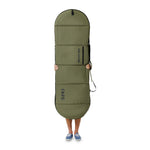


Scroll through any surf shop website and you'll find dozens of options, all claiming to be the best way to protect your board. Some are dirt cheap, some are surprisingly expensive, and most of the product descriptions sound identical: "durable," "padded," "premium protection." If you're trying to buy a surfboard bag and actually make a smart decision, that kind of vague marketing language doesn't help much.
This guide cuts through the noise and breaks down exactly what to look for before you buy, based on how these bags actually perform in daily use, not just how they read on a spec sheet. Whether you're upgrading from a basic sock cover, replacing a bag that failed you on a trip, or buying your first proper board cover, understanding these features will help you spend your money on something that actually does its job. Instead of chasing the lowest price or the flashiest listing, this guide focuses on the practical checkpoints that separate a bag worth buying from one that will let you down within a few months. For a full look at what's currently available, FARO Board Bags is a good place to start comparing real options side by side.
Why the Right Surfboard Bag Purchase Actually Matters
Before getting into specific features, it's worth understanding why this decision deserves real thought instead of a quick, price-based choice. A surfboard represents a meaningful investment, whether it's a budget shortboard or a custom-shaped board that cost several hundred dollars. The bag protecting it is the only barrier between your board and dings from car doors, pressure cracks from being stacked with other boards, sun damage from UV exposure, and the general wear of being transported to and from the water session after session.
A poor-quality bag doesn't just fail to prevent damage, it can actively contribute to it. Thin padding compresses and stops absorbing impact. Weak zippers let in sand and moisture. Non-breathable fabric traps heat and humidity against a board's surface. Buying the right surfboard bag the first time saves money in the long run by protecting a more expensive asset and by not needing to be replaced every season.
Padded Surfboard Bag vs. Lightweight Cover: Which Do You Need?
One of the first decisions to make is whether you need a padded surfboard bag or a lighter, minimally padded cover. This depends heavily on how the bag will actually be used.
A padded surfboard bag, typically with 5mm to 10mm of foam padding, is the right choice for anyone who travels with their board, checks it as luggage, transports it in a vehicle regularly, or stores multiple boards stacked together. The padding absorbs impact from bumps, drops, and pressure, which is essential any time the board isn't being carefully hand-carried from car to water.
A lightweight, minimally padded cover makes more sense for surfers who mainly need protection from sun and scratches during short walks from the car to the beach, without much risk of impact. These covers are lighter to carry and often more affordable, but they offer far less protection if the board is dropped, knocked, or transported roughly.
If there's any uncertainty about which category fits your situation, it's usually smarter to size up in protection. A padded bag can always be used for light day-to-day trips, but a lightweight cover won't protect a board during travel or rough handling.
Fabric and Build Quality: What to Check Before You Buy
The outer fabric of a surfboard bag determines how well it resists sun, sand, and general wear over time. When comparing options, check the denier rating if it's listed. Higher denier fabric, generally in the 600D to 1200D range, holds up significantly better against abrasion and UV exposure than thinner, lower-denier materials often used in budget bags.
Beyond the fabric itself, look closely at construction details in product photos or descriptions: reinforced stitching at the handles and seams, quality zippers with a smooth pull, and any mention of water-resistant coating. These details are easy to overlook when comparing prices, but they're the difference between a bag that lasts for years and one that needs replacing after a single season of regular use.
It also helps to check whether the bag has ventilation, such as mesh panels or vents. This feature prevents heat and moisture from building up inside the bag, which protects both the fabric and the board from mildew and material breakdown over time. Boards left in a hot car or a stuffy garage inside a non-ventilated bag are especially prone to this kind of damage, so it's a detail worth confirming before you commit to a purchase. To compare these details across multiple models in one place, take a look at the surfboard bags collection, where padding thickness, fabric type, and sizing are laid out for each option.

Getting the Sizing Right for Your Board
Sizing mistakes are one of the most common issues when people buy a surfboard bag online without measuring first. A bag that's too tight makes it difficult to get the board in and out and can put unnecessary stress on seams and zippers. A bag that's too loose allows the board to shift around inside, reducing the effectiveness of the padding and increasing the risk of the board rubbing against the interior fabric during transport.
The safest approach is to measure the board's exact length and width at the widest point, then check that measurement against the bag's listed interior dimensions rather than relying on general size categories like "shortboard" or "longboard," since these labels can vary between brands. If you're storing or traveling with more than one board, sizing up slightly can also allow room for wax, fins, and a leash to be packed alongside the board without forcing everything in too tightly.
It's also worth thinking ahead if a quiver is likely to grow. A slightly larger bag can accommodate a future board purchase, while a bag sized precisely to one current board may need replacing sooner than expected. This is a small planning step, but it can save an unnecessary second purchase down the line.
Zippers, Handles, and Hardware: Small Details That Matter
It's easy to focus entirely on fabric and padding while overlooking hardware, but zippers and handles are often where surfboard bags fail first. Poor-quality zippers corrode quickly in salty, humid environments and can jam or separate from the fabric after repeated use. Look for zippers described as corrosion-resistant or marine-grade, along with wide zipper pulls that stay easy to grip even with wet or sandy hands.
Handles deserve the same scrutiny. Reinforced stitching at the handle attachment points prevents tearing under the weight of a loaded board, and padded handles make a noticeable difference in comfort during longer carries, such as walking from a parking area to the water. For bags used for travel, additional features like wheels, external accessory pockets, and compression straps add real functional value beyond basic protection. None of these extras compensate for weak fabric or thin padding, but combined with solid core construction, they make day-to-day handling considerably easier.
Comparing Surfboard Cases for Travel vs. Everyday Use
Not every board cover needs to serve the same purpose, and understanding the distinction between everyday use and travel can help narrow down the right purchase. Surfboard cases built for air travel typically include heavier padding, reinforced nose and tail protection, and sturdy handles or wheels designed to withstand baggage handling. These bags are built to protect against the kind of impact that happens when boards are loaded, stacked, and transported by airline staff rather than the board's owner.
Everyday board covers, on the other hand, prioritize convenience and moderate protection for short trips to and from local surf spots. These bags are usually lighter, easier to carry, and more affordable, but they aren't built to handle the impact risks of checked luggage or long-distance transport.
Buying based on actual use case, rather than defaulting to the most protective or most affordable option available, leads to a much better long-term purchase. Someone who only surfs locally doesn't need to pay for heavy-duty travel padding, while someone planning international surf trips shouldn't rely on a lightweight cover built for casual use.
Making the Final Decision: What to Prioritize
With so many features to consider, it helps to prioritize based on how the board will actually be used most often. Frequent travelers should prioritize padding thickness, reinforced corners, and durable handles above all else. Surfers storing boards in humid or hot garages should prioritize ventilation and water-resistant coating to prevent long-term material damage. Anyone buying their first proper board cover should focus on accurate sizing and solid basic construction before worrying about extra features like wheels or accessory pockets.
FARO builds board covers around these exact priorities, combining high-denier fabric, reinforced stitching, and padding suited to real-world handling rather than showroom appearance. To understand the thinking behind that approach, the FARO about page shares more on the brand's background and design philosophy.

Ready to Choose the Right Surfboard Bag?
Buying a surfboard bag doesn't need to be complicated once you know which features actually matter for how you surf. Prioritize padding that matches your use case, fabric that can handle sun and salt exposure, accurate sizing, and hardware built to last, and you'll end up with a bag that protects your board for years rather than months. Taking a few extra minutes to compare these details before checkout is a small effort that pays off every time you load up your board for a session or a trip.
Ready to find the right fit for your board? Browse FARO's full range of padded surfboard bags and covers, or if you're not sure which option suits your board and travel habits best, contact the FARO team and they'll help you choose gear built to last.
Frequently Asked Questions (FAQ)